
Charcot Marie Tooth Disease or Charcot Marie Tooth Syndrome, (CMT) is a genetic (inherited) condition that affects the nerves of the legs and arms.
CMT affects both sensory and motor nerves, causing weakness and muscle wasting with numbness/sensory problems.
Why is it called Charcot Marie Tooth Disease?
As the name would seem to imply, the syndrome actually has nothing to do with teeth but is an amalgamation of the names of Professor Jean Martin Charcot of France and his student Pierre Marie (who first published a description of distal muscle wasting starting in the legs) and Howard Henry Tooth who described the same disease in the 19th Century. At this time it was referred to as peroneal muscular atrophy and peroneal progressive muscular atrophy.
CMT is also known as Hereditary Motor and Sensory Neuropathy.
Symptoms of CMT

Symptoms vary from person to person and not every sufferer will experience all the problems.
Fatigue is common to all people with CMT, brought about by the extra effort needed to perform normal daily activities.
Often the first sign is a slight difficulty in walking as the muscles of the feet weaken. Gait becomes awkward with a tendancy to trip up.
It can go unnoticed in children for quite a while as, at first, the only symptoms may be clumsiness or lack of agility. However, as puberty progresses, symptoms tend to accelerate, more noticeable when the child puts on “growth spurts”
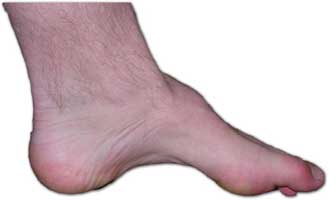
Many people with CMT have extremely high medial arches in their feet (known as pes cavus) which can often be seen from an early age. However, it is possible for some people to be very flat footed, leading to pain in the foot and conditions such as plantar fasciitis (policeman’s foot).
With this type of deformity the foot and ankle can become unstable with sufferers being prone to ankle sprains.
Toes may appear curled or “scrunched” up, known as hammer toes. This too can lead to pain in the foot and tendon problems.
Lower parts of the leg may appear very thin in relation to the rest of the leg, seeming disproportionate to the thigh.
Charcot Marie Tooth Syndrome sufferers often experience numbness in the arms and legs but it is seldom severe enough to be a major problem.
Poor circulation in the arms and legs, as a result of the nerve damage, causes hands an feet to feel constantly cold.
As the disease progresses, fine motor control may be lost in the arms and hands. They seem weaker and not as able to do simple everyday tasks such as buttoning a shirt.
Painful feet is one of the commonest feature of CMT, usually a result of poor walking gait, which in turn can lead to pain in the knees, hips and spine. Some patients can have a severe curve of the spine, referred to as scoliosis.
Nerve pain (neuropathic pain) can develop in rare cases, due to damage to the nerves themselves. There may be tremor (shaking) in the arms and legs
(Severe tremor and CMT is known as the Roussy-Levy Syndrome).
Walking can become more difficult as the patient ages and specially designed insoles (orthotics) are used to help distribute weight through the foot more effectively and to help shock absorb. Some people will require walking sticks and many use wheelchairs occasionally to help relieve the pain of walking.
In very rare cases, speech and swallowing difficulties are possible and people may experience breathing difficulties (particularly when laid flat) due to damage to the phrenic nerve which controls the diaphragm.
There are two main types of CMT:
Demyelinating CMT and Axonal CMT but at least thirty different genetic types of CMT have been identified, each causing a slightly different problem.
A rare third type, involves the nerves of the spinal cord and is known as Distal Spinal Muscular Atrophy (Spinal CMT). In this type, only the motor nerves are affected but the effects are similar to the other two types.
Diagnosis.
The first stage is to seek the advice of a general practitioner who will carry out certain tests. If the GP suspects Charcot Marie Tooth syndrome, the patient is referred to a consultant who will carry out more detailed nerve examinations.
Treatment of the condition will depend on the outcome of specialist tests and the severity of the problem.
To find out more about Marie Charcot Tooth Syndrome:
National Institute of neurological Disorders and Stroke – Charcot Marie Tooth Disease factsheet
CMT United Kingdom – working to support those affected by CMT
Charcot Marie Tooth Association – Nonprofit U.S. organization founded in 1983 whose goals are patient support, public education, promotion of research and ultimately the treatment and cure of CMT.